The Oregon Tax Court has nixed a challenge to the Portland Arts Tax.
The court ruled a lawsuit arguing that the tax violates the state's prohibition on poll taxes belongs in a local circuit court.
Judge Henry C. Breithaupt said the tax court lacks jurisdiction to hear the complaint lodged by Portland-area resident and Lewis & Clark Law School professor John A. Bogdanski. The suit is one of at least two complaints that have claimed the city's arts tax, passed by voters in 2012, is unconstitutional.
Judge Breithaupt cited an 1980 decision by the Oregon Supreme Court that held the tax court may only decide complaints that challenge a tax levied by the state. Since Portland, and not the state, imposed the arts tax, Bogdanski's suit belongs in the local circuit court, the ruling said.
“The government that imposed the arts tax was the city of Portland, not the state of Oregon,” Judge Breithaupt said. “Accordingly, disputes about the arts tax do not arise under the tax laws of the state of Oregon and, all parties agreeing that there is no jurisdictional basis under ORS 305.620, this court has no jurisdiction over disputes about the arts tax.”
Wednesday, January 29, 2014


Things you won't see on Downton Abbey: Fines for beating a German in his own Fatherland and well-known German drinking customs
Tempers were flaring in the run-up to World War I, at least according to this report in the Daily Telegraph from January 29, 1914.

Two things I learned today:
Two things I learned today:
- There is a very steep fine for being guilty of the "gross audacity of beating a German in his own Fatherland;" and
- If you are in Germany drinking out of one of those beer steins with a lid, you better keep the lid down--If someone catches you with your lid up and places his drink on top, you owe him a drink.
Tuesday, January 28, 2014
Silly statistics in the wealth inequality debate: The Undercover Economist strikes back
You may have heard that Oxfam is promoting its report that says the richest 85 people in the world have more wealth than the bottom 3.5 billion. Of course, the media have picked up the story and continue to run with it.
You may have also heard that Tim Harford is promoting his new book, The Undercover Economist Strikes Back.
In a recent talk, Harford strikes back at the the use and misuse of such factoids in the wealth inequality debate and in macroeconomics in general.

The entire talk is below. Harford begins around the 7:20 mark. Keep watching to see why economists treat data like an unfaithful spouse.
Originally posted at http://ift.tt/LkCj2i.
Monday, January 27, 2014
Oregon Business blog: Raising the minimum wage — Is it worth the fight?

Oregon’s minimum wage workers rang in the New Year with a raise. At $9.10 an hour, the state now has the second highest minimum wage in the country. Add in payroll taxes and benefits, such as paid time off, and the typical minimum wage worker in Oregon costs an employer about $12.75 an hour.
People pushing a higher minimum wage say that it would lift Oregon families out of poverty. A breathless press release from the state’s labor bureau claims that the latest bump in minimum wage will boost Oregon’s economy with $20 million of additional consumer spending out of thin air. Opponents argue that Oregon’s ever increasing minimum wage leads to layoffs of low-wage employees and may lead some firms to close-up shop.
In fact, both sides are right about the direction of the impact, but a bit hyperbolic about the size. So the question is really one of trade-offs: Do the additional benefits exceed the additional costs?
First, let’s look at who earns the minimum wage. The figure above shows a recent employment snapshot for the state. The Oregon Employment Department estimates 149,700 people are affected by this year’s minimum wage increase in one or more of their jobs. That amounts to 8.5 percent of Oregon employment. The number includes people who earned anything less than $9.10 an hour last year and includes anyone who earned minimum wage in any job. So, a teacher who spends the summer months working at a minimum wage job would be included in the count of minimum wage workers reported by the state’s employment department.
Very few workers rely on the minimum wage as their sole source of income. The Employment Policies Institute calculates that less than 1.4 percent of Oregon employees work full time—35 hours or more—in a minimum wage job. The minimum wage work force is a part-time workforce. The share of the population that relies entirely on minimum wage work to support a family is a tiny sliver of the state. In fact, in the U.S., in 8 out of 10 households with children and in which someone earns minimum wage, the minimum wage job accounts for less than 20 percent of total household income. That is, in most cases, the minimum wage job provides a small supplement to income earned from higher paying jobs.
There is some evidence that raising the minimum wage could improve incomes for the working poor. New research suggests that an increased minimum wage could increase family incomes for those at the lower end of the income distribution (in the bottom 15 percent). On the other hand, the impacts are tiny. Using the numbers provided in the paper, it looks like Oregon’s recent minimum wage increase would boost the average family income for this group by less than $3 a week.
On the employer side, its not clear that raising the minimum wage has a huge impact on hiring, firing, and layoff decisions. Especially when the increase is as small as Oregon’s 1.7 percent bump this year. That’s because employers often have many options in the face of higher wage costs. They can raise prices, cut benefits, reduce profits, and invest in technology that boosts labor productivity. While automated fast food ordering may take away a job, it also increases the productivity of the workers that remain.
Indexing the minimum wage to allow for annual increases is perfect politics. When else can a politician take credit for giving someone a pay raise? They can trot out a sympathetic single parent who is better off from the slightly bigger paycheck (if they don’t lose it all in taxes or reduced public assistance).
Even better, an ever increasing minimum wage is a policy where you don’t see the victims. You don’t see the employer who can’t justify paying $12.75 an hour for someone with no experience. You don’t see the teenager who can’t get a job because no one’s willing to pay that kind of money for someone who has no experience or track record.
Oregon unemployment for 16–19 year olds is 26.6 percent. That’s about 3–4 percentage points above the U.S. average. And, it’s not that our teens are lazy. Labor force participation for that age group in Oregon is about the same as the U.S. average. Our kids want to work, but they can’t get the work.
The take away:
Raising the minimum wage makes people who get the raise, and their families, better off. But, just a little. In fact, the weekly amount of the raise amounts to less than the price of a frozen pizza. Employers are slightly worse off, but they have many ways to adjust so that the impact of any annual increase in the minimum wage would be imperceptible. At the same time, Oregon’s high and ever increasing minimum wage puts our younger workers in a Catch-22: They need experience to justify their compensation costs, but they can’t get experience because they cost too much to employ.
Originally published by Oregon Business.
Originally posted at http://ift.tt/1gjtGTC.
Saturday, January 25, 2014
Old home truths about how the world works
From No Statistics, no mischief: A modest proposal for the new Fed chairman:
Stripped of his numbers an economist would have to resort to the old home truths about how the world works: If you tax something you get less of it; as a general rule an individual manages his own affairs better than his neighbor can; it’s rude to be bossy; the number of problems that resolve themselves if only you wait long enough is far larger than the number of problems solved by mucking around in them. And the cure is often worse than the disease:Originally posted at http://www.econinternational.com/blog/2014/01/old-home-truths-about-how-the-world-works/
“In the long run, the aggregate of the decisions of individual businessmen, exercising individual judgment in a free economy, even if often mistaken, is likely to do less harm than the centralized decisions of a Government; and certainly the harm is likely to be counteracted faster.”
Thursday, January 9, 2014
The Nutty Professor meets Barney Fife in Oregon's public sector: Where part-time faculty are 24/7 child abuse reporters

As an adjunct I don't have any obligations to publish obscure academic articles that no one reads. I don't have any obligation to serve on time-consuming committees investigating whether the university should ban the selling of bottled water on campus (yes, this really is considered a crucial issue in higher education).
But, I do have to teach class for four hours a week, be available to meet with students, and give them grades.
Pretty mundane, corduroy-jacket-with-arm-patch type stuff. But, little did I know until yesterday, that in addition to my part-time teaching gig, I am deputized as a 24/7 child abuse crime fighter, as outlined in this email I got from the university administration (of course I added all the emphasis):
All ... faculty and staff, including student employees and graduate assistants, are mandatory reporters under Oregon's child abuse reporting law and should understand their child abuse reporting obligations.
...
Reporting is both a professional and personal requirement, and it goes beyond the workplace. This means that you are a mandatory child abuse reporter 24/7, and you are required to report suspected child abuse anytime, anywhere. In other words, whether you learn of suspected abuse or a suspected abuser while at work, while coaching your child's soccer team, or when shopping for groceries on the weekend, your reporting obligation is the same. Failure to report is a crime, but mandatory reporters are immune from liability for reporting suspected abuse in good faith.
Now, child abuse is on my list of Bad Things That Should Be Reported.
But really. It seems a bit extreme that one can go from part-time professor to full-time criminal if he or she doesn't report even a suspicion of child abuse. In other words, I --- or any public employee in Oregon --- could be fired and charged with a crime if we don't call the police to report a parent spanking a child for misbehaving in the grocery store. Or if we see a kid with a bruise, and file a police report on our suspicions of possible abuse.
And, I'm sure that who immune-from-liability thing will never get abused ... [snark]
My guess is this law will go down as one of those Laws That's on the Books, But Never Gets Enforced Until Something Really, Really Bad Happens.
So where did it come from?
Penn State, of course.
Oh, by the way. For my right-leaning friends who think this is some sort of Loony Liberal Legislation. Guess again. The legislation passed unanimously in the Oregon House and Senate. That's right: Every single D and every single R.
So if you see me walking through campus with a bit more swagger than before, you'll know its because from here on out I'm the law in these parts. And justice never rests.
Friday, January 3, 2014
Oregon Business blog: Lessons learned from Oregon state and local technology failures

Cover Oregon’s fizzled launch has been a high profile disaster for the state. After spending $160 million, Oregon’s health insurance exchange had exactly zero people sign up for private insurance in the first two months.
Now Cover Oregon claims to have enrolled 7,300 people. However, the fine print from the Cover Oregon press release reveals that the suspiciously round number is actually an estimate. In fact, Cover Oregon has not indicated that a single person has paid their first bill, which is the industry’s measure of enrollment.
As with any bureaucratic failure, finger-pointing is an unavoidable stage. Rather than trying to figure out who messed up and when they messed up, we can use Oregon’s history of multi-million dollar software disasters to illustrate some valuable lessons.
- Start small. Do one thing, do it well, then add bells and whistles. Google began with a search box. That’s it. It took two years before the company ran ads. Oregon’s software projects try to do too much, too soon, resulting in busted budgets and missed deadlines.
- Off-the-shelf is another way of saying, “It works!” Use the resources that have already been developed and tested. Learn the lessons from other states and municipalities. We Oregonians like to think we’re special, embodied in the state’s old marketing slogan “Things look different here.” But, fact is, we’re not that different from any other state in the U.S. and in many cases we don’t need one-of-a-kind software solutions.
- Know your limits. Software firms specialize in software, so use them. Don’t try to do it yourself. If you don’t know what you’re doing, then you shouldn’t be overseeing the project. Cover Oregon was urged to hire a system integrator to oversee implementation of the Cover Oregon online exchange. Instead, the state decided to be its own general contractor and found that its staff had no idea what was going on.
A history of budget busting software projects
Oregon has a 20-year history of budget busting software failures. Cover Oregon is just the latest and the first to catch national attention.
- This year, it was revealed that the Oregon Employment Department burned up $6.9 million on a software project that never worked and expects to spend another $1.2 million to go back to the old system. Even worse, the Oregonian reports that the state may be forced to repay $1 million or more in federal funding because the project is being canceled.
- The Oregon Wireless Interoperability Network blew through $600 million before it was deemed a failure and laid to rest in 2011. The project was intended to migrate all of the state’s radio systems to one system such that each of the systems could talk to each other. A scaled back State Radio Project hopes to salvage some of OWIN’s earlier work.
- Many Portlanders still recall the city’s $35 million water billing software debacle. This was followed a decade later by a payroll and financial services software disaster costing $47 million, or more than triple the original estimate. The project was completed more than a year late, and did not include expected functions.
- In 1993, the Oregon Department of Motor Vehicles began what was projected to be a five year, $48 million project to automate its operations. By 1996, the costs had soared to $123 million. That year, the state pulled the plug on the project, leaving the agency “saddled with useless hardware and programs” according to the Oregonian.
Start small
The Affordable Care Acts requirements for an exchange are straightforward. With the delay in the employer mandate, only individual plans have to be offered on the exchange. The exchange is supposed to use your age and tobacco use status to determine which plans are available to you and whether you qualify for Medicaid. Then it collects you and your household financial information to determine whether you qualify for a tax credit/subsidy.
Instead, Cover Oregon opted for a cutting-edge exchange site that did more than was demanded by the Affordable Care Act. In addition to allowing consumers to shop for commercial health insurance, the Oregon site was supposed to be a one-stop-shop that allowed small-businesses to shop for insurance and to enroll eligible participants directly into the Oregon Health Plan, the state’s version of Medicaid.
Years earlier, Oregon had a similar experience when OWIN busted its budget in part because the state decided to adopt a “highly sophisticated network design.” Portland’s water billing and payroll fiascos were guided by a vision to develop “sophisticated” systems to allow for virtually endless variation to satisfy an expansive range of users and situations.
In contrast to the Cover Oregon experience, Kentucky is known for having one of the most trouble free exchange sites. As reported in USA Today, Carrie Banahan, executive director of the Kentucky exchange relates, “Our system doesn’t have a lot of bells and whistles.”
Google is a $356 billion company that began with a simple ugly search box. It was simple and it was ugly, but it worked. And it worked better than anything else. It took Google more than 15 years to add all the services it offers today. And the search box looks almost the same as it did on Day 1.
Even the moon landing was a series of small steps. Watch The Right Stuff. The moon landing was just one giant leap in a series of steps that began with test pilots, space monkeys, Earth orbits, and so on.
It’s OK to use off-the-shelf solutions
Politicians seem to have a deep disdain for off-the-shelf software: “We’re different. We can’t use commoners’ software.” But, let’s face it. We’re not that special and as a state we’re too small to support spending on a one-of-a-kind software solution. As a state, we’re not that much different from the other 49 states and our local governments are not that much different from the thousands of other local governments throughout the country.
Because Cover Oregon opted for a cutting-edge exchange site that did more than required, it was more difficult for the state to use off-the-shelf solutions. The Oregonian reports that Oracle’s implementation of the Cover Oregon exchange had thousands of lines of custom software code.
The OWIN experience is instructive here. The state opted for a costly custom implementation when off-the-shelf solutions were already out there. A post mortem of the project concluded management “failed to fully utilize the available wireless infrastructure assets of both the public and private sector. Lower cost alternatives appeared to be readily available.”
Portland’s water billing fiasco was driven, in part, by a demand by the commissioner in charge to develop custom software to handle his vision of future water rate reform. An audit of the city’s payroll and financial services software mess found that the original scope included non-essential items including the ability to generate custom reports.
Oregon was also given nearly $100 million by the federal government to be one of the first states to set up an ACA exchange. While there is some pride in being a pioneer, it comes at cost of having no one to learn from. As the old saying goes, “The early bird gets the worm, but the second mouse gets the cheese.”
Again, Cover Oregon could have looked to the disastrous OWIN project for some lessons. A review of the project found the project management failed “to fully utilize cost savings lessons learned from other states.”
Know your limits
Ben Folds sings, “So why you gotta act like you know when you don’t know? / It’s OK if you don’t know everything.” It’s a motto that public sector project managers would be wise to adopt.
USA Today notes that states successful in implementing the ACA exchanges had employed “systems integrators” to coordinate communications between the states’ websites, their Medicaid enrollment systems and with other state and federal systems. These states recognized that they don’t know everything and hired someone who had the necessary knowledge.
The Oregonian reports that Oregon was urged to hire a system integrator experienced with Oracle’s architecture to provide expertise putting together the Cover Oregon exchange. Instead, the state insisted on using its own staff, who seemed overwhelmed with the project and the challenges presented.
Summary
The Cover Oregon disaster is just the latest in a long line of public sector software project failures. These failures provide a useful set of lessons for future projects: start small, look at existing solutions, and hire expertise when you don’t have it yourself.
While the lessons are expensive, one can only hope that future projects can avoid repeating the same mistakes that have been made over the past 20 years.
Originally published at Oregon Business.
Originally posted at http://www.econinternational.com/blog/2014/01/oregon-business-blog-lessons-learned-from-oregon-state-and-local-software-failures/.
Tuesday, December 31, 2013
Case-Shiller: 2013 was a good year for home price growth, but expect slowing in 2014

Originally posted at http://www.econinternational.com/blog/2013/12/case-shiller-2013-was-a-good-year-for-home-price-growth-but-expect-slowing-in-2014/.
Monday, December 30, 2013
Pending home sales up a bit in November; NAR predicts 2013 sales of existing homes will be up 15% from last year

Originally posted at http://www.econinternational.com/blog/2013/12/pending-home-sales-up-a-bit-in-november-nar-predicts-2013-sales-of-existing-homes-will-be-up-15-from-last-year/.
Sunday, December 29, 2013
What the heck is Chicken Little?
Drive down Glisan Street in Northeast Portland and you'll go past a tiny storefront, with a sign that says, Chicken Little -- Fried Chicken -- Dine In, Take Out. The sign out front says OPEN, but the permanently drawn blinds makes you wonder if they just forgot to turn the sign around.
The tiny size and the crazy location makes you wonder if maybe something "else" might be going on? Is it a front for the mob? Is Aretha Franklin taking orders, while Murph is cooking chicken?
For years, we've talked and speculated about Chicken Little, but never checked it out.
So, yesterday, I said, "Let's try Chicken Little." The family was stir crazy to the point of agreeing to anything so we tried anything.
With three of the four kids in pajamas at 6 pm, take out seemed to be the right speed.
I dialed the number and got an answer after eight rings. I was shocked -- I don't know why -- to hear a pleasant voice on the other end. She informed me that 20 pieces would be good enough for a family of six. I also ordered a large order of jo-jos, which I was informed would be plenty, because "they're kind of a large order." OK. She also let me know that one of their broaster's was down, and it would take 40 minutes instead of the typical 20 minutes.


I bundled up two of the kids and made the 3 minute drive down to Chicken Little.
First off ... Chicken Little really is a store front. Walk in the front door, and you might run into the counter. The counter has three stools ... That's it for dine-in at Chicken Little.
That's not all ... Next door is the Hour Glass Pub & Eatery, a cozy local bar with plenty of seating -- if you are over 21 years of age.
One more thing ... No mob, no Aretha Franklin. Just some local Portlanders making some darn good fried chicken. So local, in fact, that the bartender at the Hour Glass is the mother of two of my kids' classmates!
We orders 20 pieces of chicken: breast, thighs, legs, wings. That's a lot of chicken.
Then the jo-jos ... Imagine a big donut box filled with huge quarters of deep fried potatoes. The biggest potatoes you've ever seen! Yeah, it was a lot. It probably weighed five pounds.
Add to that a slide of cole slaws and some ranch dressing (I don't know why ranch, but whatever), and we were off to home.

Now, my kids are KFC kids. To them, nothing is better than the Colonel. (To me KFC means taking two trips to the store: One to get the food, and another to get the food they forgot and replace the parts of the order they screwed up.)
Last night that all changed. Jack, the oldest, ate more fried chicken that I've ever seen him eat. He raved about it. That whole broasting thing really does make some great fried chicken, crunchy on the outside, moist on the inside.
Despite how much we ate, we still have enough leftovers to last through the week.
So there you have it. Chicken Little, food surprise of the year.
The tiny size and the crazy location makes you wonder if maybe something "else" might be going on? Is it a front for the mob? Is Aretha Franklin taking orders, while Murph is cooking chicken?
For years, we've talked and speculated about Chicken Little, but never checked it out.
So, yesterday, I said, "Let's try Chicken Little." The family was stir crazy to the point of agreeing to anything so we tried anything.
With three of the four kids in pajamas at 6 pm, take out seemed to be the right speed.
I dialed the number and got an answer after eight rings. I was shocked -- I don't know why -- to hear a pleasant voice on the other end. She informed me that 20 pieces would be good enough for a family of six. I also ordered a large order of jo-jos, which I was informed would be plenty, because "they're kind of a large order." OK. She also let me know that one of their broaster's was down, and it would take 40 minutes instead of the typical 20 minutes.


I bundled up two of the kids and made the 3 minute drive down to Chicken Little.
First off ... Chicken Little really is a store front. Walk in the front door, and you might run into the counter. The counter has three stools ... That's it for dine-in at Chicken Little.
That's not all ... Next door is the Hour Glass Pub & Eatery, a cozy local bar with plenty of seating -- if you are over 21 years of age.
One more thing ... No mob, no Aretha Franklin. Just some local Portlanders making some darn good fried chicken. So local, in fact, that the bartender at the Hour Glass is the mother of two of my kids' classmates!
We orders 20 pieces of chicken: breast, thighs, legs, wings. That's a lot of chicken.
Then the jo-jos ... Imagine a big donut box filled with huge quarters of deep fried potatoes. The biggest potatoes you've ever seen! Yeah, it was a lot. It probably weighed five pounds.
Add to that a slide of cole slaws and some ranch dressing (I don't know why ranch, but whatever), and we were off to home.

Now, my kids are KFC kids. To them, nothing is better than the Colonel. (To me KFC means taking two trips to the store: One to get the food, and another to get the food they forgot and replace the parts of the order they screwed up.)
Last night that all changed. Jack, the oldest, ate more fried chicken that I've ever seen him eat. He raved about it. That whole broasting thing really does make some great fried chicken, crunchy on the outside, moist on the inside.
Despite how much we ate, we still have enough leftovers to last through the week.
So there you have it. Chicken Little, food surprise of the year.
Friday, November 22, 2013
Oregon Business blog post on right-to-work: A spark to light Oregon’s employment engine
A little less than a year ago, Michigan became the 24th state to enact right-to-work legislation, a development that has been closely associated with the temperature of Hades dropping. Since then, right-to-work supporters have sought to enact similar legislation throughout the United States. Even here in the Northwest.
In Oregon, the Public Employee Choice Act would provide right-to-work protections to public employees. With the Boeing’s machinists recent rejection of a new contract and the company’s drift toward more business-friendly states, there has been some speculation that the state of Washington may consider right-to-work legislation in order to hang on to key employers.
The widespread impact of coal miner strikes through the late 1940s led some to conclude that the Wagner Act had conferred too much power on organized labor. The Taft-Hartley Act — enacted in 1947 over President Truman’s veto — modified the impact of the Wagner Act by affirming the right of states to prohibit certain union shop restrictions enabled by the Wagner Act. Specifically, Taft-Hartley indicates that states can pass laws that prohibit unions and employers from making union membership or the payment of union dues a condition of employment. These state statutes are referred to as “right-to-work” laws because they give employees the right to work without the being forced to join a union or handover a portion of their paychecks to unions in the form of dues or fees.
For example, the figure below shows that since 1950, states with right-to-work laws have seen their employment grow at roughly double the rate of non-right-to-work states.

While right-to-work laws can be a key component of a pro-investment and pro-employment package that encourages firms to locate and expand in a state, it would not be fair to conclude that all the employment gains can be assigned to right-to-work.
Indeed, there are many factors that contribute to employment growth. For example, some have argued that one of the biggest predictors of employment/population growth is climate: People tend to migrate toward nicer weather. Harvard economist Edward Glaeser, explains:
Statistical analysis can account for these other factors and separate out the relationship between right-to-work laws and employment growth. My research finds that, if Oregon were to enact right-to-work legislation, the state’s employment would grow one-half of one percent faster than it is currently projected to grow.
Now, one-half of one percent does not sound like a lot. But, over time, even tiny changes in the growth rate can have large long-run impacts.
For example, the figure below shows that if Oregon adopted right-to-work legislation that went into effect in 2015, then five years later the state would have 56,000 more people working than without right-to-work.

The statistical analysis I conducted shows that wage and salary growth under right-to-work would keep pace or outpace employment growth. In other words, wages would grow as fast or faster than employment. That means that, based on the experience across multiple states over many years, right-to-work laws do not lead to lower wages and are likely to improve pay over time.
Originally published by Oregon Business.
In Oregon, the Public Employee Choice Act would provide right-to-work protections to public employees. With the Boeing’s machinists recent rejection of a new contract and the company’s drift toward more business-friendly states, there has been some speculation that the state of Washington may consider right-to-work legislation in order to hang on to key employers.
What is right-to-work?
Right-to-work policies liberalize labor market conditions by loosening some of the most restrictive features of labor legislation enacted during the Great Depression. In 1935, at the depths of the Great Depression job losses, Congress passed the National Labor Relations Act (also known as the Wagner Act). This act permitted closed union shops which require employees to join a union and/or pay union dues as a condition of employment.The widespread impact of coal miner strikes through the late 1940s led some to conclude that the Wagner Act had conferred too much power on organized labor. The Taft-Hartley Act — enacted in 1947 over President Truman’s veto — modified the impact of the Wagner Act by affirming the right of states to prohibit certain union shop restrictions enabled by the Wagner Act. Specifically, Taft-Hartley indicates that states can pass laws that prohibit unions and employers from making union membership or the payment of union dues a condition of employment. These state statutes are referred to as “right-to-work” laws because they give employees the right to work without the being forced to join a union or handover a portion of their paychecks to unions in the form of dues or fees.
A boost to employment
Right-to-work has gained attention in the wake of the past recession because such laws can be a key component of a pro-investment and pro-employment package that encourages firms to locate and expand in a state. Indeed, a large body of research has found that as a group, right-to-work states have enjoyed more rapid employment growth, better job preservation, and faster recoveries from recession than states without right-to-work laws in place.For example, the figure below shows that since 1950, states with right-to-work laws have seen their employment grow at roughly double the rate of non-right-to-work states.

While right-to-work laws can be a key component of a pro-investment and pro-employment package that encourages firms to locate and expand in a state, it would not be fair to conclude that all the employment gains can be assigned to right-to-work.
Indeed, there are many factors that contribute to employment growth. For example, some have argued that one of the biggest predictors of employment/population growth is climate: People tend to migrate toward nicer weather. Harvard economist Edward Glaeser, explains:
But the connection between January temperature and growth reflects more than just the weather. Sixty years ago, income and productivity in the South lagged significantly below that in Northern states. There has been a remarkable convergence of incomes since then, as manufacturing firms moved to lower wage areas that gradually became higher wage. Right-to-work laws in Southern states seem to have significantly attracted new industry (Holmes, 1998). Indeed, one can quite plausibly argue that the South had far worse institutions for economic growth before the Civil Rights Era, but that today, fewer regulations and lower taxes makes the Sunbelt more pro-growth
Statistical analysis can account for these other factors and separate out the relationship between right-to-work laws and employment growth. My research finds that, if Oregon were to enact right-to-work legislation, the state’s employment would grow one-half of one percent faster than it is currently projected to grow.
Now, one-half of one percent does not sound like a lot. But, over time, even tiny changes in the growth rate can have large long-run impacts.
For example, the figure below shows that if Oregon adopted right-to-work legislation that went into effect in 2015, then five years later the state would have 56,000 more people working than without right-to-work.

A boost to pay
Opponents of right-to-work argue that enacting a right-to-work law would gut Oregon incomes, calling it “right-to-work for less.” In fact, however, research that controls for other factors that affect wages, finds that right-to-work states have average wages that are “significantly higher” (more than six percent higher) than in non-right-to-work states.The statistical analysis I conducted shows that wage and salary growth under right-to-work would keep pace or outpace employment growth. In other words, wages would grow as fast or faster than employment. That means that, based on the experience across multiple states over many years, right-to-work laws do not lead to lower wages and are likely to improve pay over time.
A fiscal free lunch
Right-to-work legislation may be the only economic development policy that comes at zero cost to state government. Enacting right-to-work does not require any new taxes and does not demand any new spending and would provide the state a permanent structural advantage in attracting employers and employment to the state.Originally published by Oregon Business.
Sunday, November 17, 2013


Friday, November 15, 2013
Mission Impossible: Care Oregon needs to sign up 240 people an hour 24/7 ... Using Internet Explorer and a single fax line!

Let's review some key deadlines:
- December 15, 2013 is the deadline to complete enrollment at Cover Oregon.
- By January 1, 2014, you must have health insurance, or face a penalty, but you are allowed to have a gap in coverage no longer than three consecutive months, so ...
- March 31, 2004 is the drop-dead date for having coverage without having to pay a fine.
Something I've never heard anyone mention is that if you don't have coverage by March 31, there is really no point in buying insurance until January 1 of the next year. You will have to pay the penalty for not having insurance. So, what's the point of buying something that you already paid a penalty for not buying?
What is "enrollment complete?"
On OPB's Think Out Loud, Cover Oregon staff explained what you have to do to "complete" enrollment ... And it's more than just clicking some buttons on a website (start listening around 14:10):We need to have the enrollment complete by December 15. And the "enrollment complete by December 15" means that we have received their application and sent them out an enrollment packet and then received that enrollment packet back.
So, there are three big steps:
- Send in an ObamaCare application,
- Have Cover Oregon approve the application and send back an enrollment packet to you, and
- Pick a plan, sign the packet, and send it back to Cover Oregon.
Can Cover Oregon handle the load?
Keep in mind that Cover Oregon has signed up exactly zero people for ObamaCare.Add to that the 150,000 Oregonians who have received cancellation notices, the 11,000 in Oregon's soon-to-be closed high risk pool, and the backlog of 12,000 paper applications. You're looking at a minimum of 173,000 applications that must be processed in the next 30 days.
Keep in mind, too ...
If you want to fill out your ObamaCare application on the Cover Oregon website, you must use Internet Explorer (which only 24 percent of Internet users use anymore).
Oh, and if you want to fax in your application (does anyone fax anymore?), according to the OPB interview, Cover Oregon has only one fax line.
As a matter of perspective, that means Cover Oregon must process about 240 applications every hour of every day (yes, that means 24/7) for the next month.
I'm not saying it can't be done, but it sure seems like a near-impossible task.
Friday, October 11, 2013
You won't find the words "software glitch" in this post - Looking for the "affordable" in the Affordable Care Act
Like any nerdy economist, I spent October 1, sitting at my computer trying out Oregon's Obamacare exchange, called Cover Oregon.
It took a few tries to get the site to produce anything other than a "Whoops." (Yes, government websites in Oregon use the word "whoops.") After that, I got whopping list of 69 Obamacare-compliant plans for my family of six: two adults over 40 and four kids ranging from preschool to high school age.
The list Cover Oregon spits out is not particularly helpful in comparing each of the plans, so I put together this graph of each of the plans available to my family.

Here's what the figure shows:
It took a few tries to get the site to produce anything other than a "Whoops." (Yes, government websites in Oregon use the word "whoops.") After that, I got whopping list of 69 Obamacare-compliant plans for my family of six: two adults over 40 and four kids ranging from preschool to high school age.
The list Cover Oregon spits out is not particularly helpful in comparing each of the plans, so I put together this graph of each of the plans available to my family.

Here's what the figure shows:
- There is a wide range of prices. Among plans with a $2,500 deductible, the most expensive plan (Providence Gold) is $3,800 more than the least expensive plan (Moda Health Bronze).
- Looking at just the annual payment, the lowest cost plans are Moda Health's $5,000 deductible and $5,250 deductible plans, with an annual cost of about $7,050. That's about the same as the payment on a $125,000 mortgage.
- You cannot see it on the figure, but Oregon's Health CO-OP, which has made quite a bit of a splash with the media, has some of the highest rates. Slap the word co-op on something (especially in capital letters), and Oregonians will eat it up.
What's the deal with high deductible plans?
Let's rejigger the graph a bit.
The figure below shows what the total annual cost of the plans would be if the deductible is added to the cost. It does not do much good to have insurance if you have to spend thousands of dollars before coverage kicks in.

If you look at the dotted line between deductibles of $1,000 and $5,000 the line appears to be pretty flat. In other words, generally speaking, an increase in the annual deductible is matched dollar-for-dollar with an decrease in the annual payment. That seems to make sense.
Now, look what happens if the annual deductible is more than $5,000. The annual payment increases rather than decreases, which seems at odds with how things should be. There seems to be at least two reasons:
The figure below shows what the total annual cost of the plans would be if the deductible is added to the cost. It does not do much good to have insurance if you have to spend thousands of dollars before coverage kicks in.

If you look at the dotted line between deductibles of $1,000 and $5,000 the line appears to be pretty flat. In other words, generally speaking, an increase in the annual deductible is matched dollar-for-dollar with an decrease in the annual payment. That seems to make sense.
Now, look what happens if the annual deductible is more than $5,000. The annual payment increases rather than decreases, which seems at odds with how things should be. There seems to be at least two reasons:
- For people with extremely high (i.e., "catastrophic") health care costs, the annual deductible is virtually meaningless. If you are facing $100,000 in medical bills, it makes little difference whether you have a $500 deductible or a $5,000 deductible. Thus, those who are most costly to insure may self-select into plans with higher deductibles. An observation verified in a clunkily written working paper.
- There are fewer insurers offering plans with higher deductibles. The reduced competition among providers may result in higher prices.
What about the subsidies?
Because our family income is about the same as a Congressional staffer's, we don't qualify for any of the subsidies--but if I gave up teaching or did less consulting, I would qualify for a subsidy. (Talk about incentives!)Thursday, October 10, 2013
First blog post on Oregon Business: Income inquality - is it such a big deal?
The following is from my blog post on the Oregon Business website.
Comedian Louis C. K. famously noted that “everything is amazing right now and nobody is happy.” We live in a world of unprecedented prosperity and are much better off then our parents and grandparents were. Since 1950, the average house size has doubled, while the average family size shrunk. We’ve gone from kids sharing a bedroom to each kid having his or her own bedroom. In 1980 a second land line phone was a luxury. Today teenagers carry iPhones with more computing power than most 1990s era PCs.
Regardless of the progress, the recent recession and sluggish recovery has turned our attention to the growing gap between rich and poor.
Even The Economist — the one-time bastion of free market ideas — is now wringing its hands over growing income inequality around the world, declaring “a dramatic concentration of incomes over the past 30 years.”
Income inequality is not such a big deal if everyone is winning.
It’s no big deal that Nike CEO Mark Parker got a raise of more than $3 million last year. Sure, his raise makes him much better off, but I can’t think of anyone who is worse off because of the raise. Are Nike workers paid less because of the raise? Are we paying more for shoes because of the raise? Did Nike’s stock price drop after the raise was announced?
While it may be the case that the rich are getting richer, it’s not clear that the poor are getting poorer. According to the Census Bureau, from 1967 to 2010, inflation-adjusted household incomes for the top five percent grew by $72,350. Over the same period, household incomes for the bottom 20 percent grew by $2,900. Yes, the rich are getting richer, but so are the poor—just at a slower rate.
More important than figuring out whether the income gap is growing, the much bigger question for an economist is: Does it matter?
The overwhelming consensus among economists is … maybe.
One of the key studies finds that income inequality retards growth in poorer countries, but encourages growth in richer countries. In the U.S., research finds that increased incomes among the top 10% of income earners in a state are associated with higher statewide average incomes. In contrast, the International Monetary Fund concludes “reduced inequality and sustained growth may thus be two sides of the same coin.”
Since the data don’t provide a very satisfying answer, the next question is: Could it matter?
Theoretically, yes. University of Oregon economist, Mark Thoma, notes:
The knee-jerk response to a growing income gap is more progressive income taxation. However, increased taxes to redistribute income do nothing to foster economic growth.
On the other hand, the figure below shows that growing employment may be one powerful way to slow the growth of the income gap.

The figure shows the relationship between employment growth and income inequality in each state of the U.S. (Income inequality is measured by a number called the Gini Coefficient where 0 is complete equality meaning everyone has equal incomes and 1 is complete inequality meaning one person earns all the income and everyone earns nothing.)
While it’s true that since 1979, income inequality has increased in every state, there are wide differences among states. For example, inequality increased by four times as much in New York and DC as it did in Alaska and South Dakota. Income inequality seems to be an East Coast problem first, followed by the Rust Belt states of Illinois, Ohio, and Michigan.
Most striking is the relationship between income inequality and employment. States with weak employment growth saw the steepest increases in income inequality. Connecticut, New York, and DC had employment growth that was less than half the U.S. average and had the steepest increases in income inequality.
Also striking is the fact that employment grew faster in states without income taxes (shown by the black markers). These states also did not see an change in income inequality that was much different from the U.S. average. In this way, reducing income taxes may be a way to grow employment without necessarily increasing the income gap.
The bottom line
There is no consensus among economists that income inequality has any impact on economic development. However, policymakers seeking to make income distribution more equitable should turn first to finding ways to make a bigger pie by growing employment rather than figuring out how to cut the pie into smaller slices by tax-and-spend redistribution programs.

Comedian Louis C. K. famously noted that “everything is amazing right now and nobody is happy.” We live in a world of unprecedented prosperity and are much better off then our parents and grandparents were. Since 1950, the average house size has doubled, while the average family size shrunk. We’ve gone from kids sharing a bedroom to each kid having his or her own bedroom. In 1980 a second land line phone was a luxury. Today teenagers carry iPhones with more computing power than most 1990s era PCs.
Regardless of the progress, the recent recession and sluggish recovery has turned our attention to the growing gap between rich and poor.
Even The Economist — the one-time bastion of free market ideas — is now wringing its hands over growing income inequality around the world, declaring “a dramatic concentration of incomes over the past 30 years.”
Income inequality is not such a big deal if everyone is winning.
It’s no big deal that Nike CEO Mark Parker got a raise of more than $3 million last year. Sure, his raise makes him much better off, but I can’t think of anyone who is worse off because of the raise. Are Nike workers paid less because of the raise? Are we paying more for shoes because of the raise? Did Nike’s stock price drop after the raise was announced?
While it may be the case that the rich are getting richer, it’s not clear that the poor are getting poorer. According to the Census Bureau, from 1967 to 2010, inflation-adjusted household incomes for the top five percent grew by $72,350. Over the same period, household incomes for the bottom 20 percent grew by $2,900. Yes, the rich are getting richer, but so are the poor—just at a slower rate.
More important than figuring out whether the income gap is growing, the much bigger question for an economist is: Does it matter?
The overwhelming consensus among economists is … maybe.
One of the key studies finds that income inequality retards growth in poorer countries, but encourages growth in richer countries. In the U.S., research finds that increased incomes among the top 10% of income earners in a state are associated with higher statewide average incomes. In contrast, the International Monetary Fund concludes “reduced inequality and sustained growth may thus be two sides of the same coin.”
Since the data don’t provide a very satisfying answer, the next question is: Could it matter?
Theoretically, yes. University of Oregon economist, Mark Thoma, notes:
- Perfectly equal distribution of income would destroy any incentive to put in the effort to get ahead (you get the same income whether you work or not).
- On the other hand, a system in which one person earns all the income and everyone else gets nothing, would destroy any incentive to put in the effort to get ahead (a perfectly unequal system in which you would get nothing whether you work or not).
- Thus, there must be some optimal level of inequality between perfect equality and perfect inequality. The debate these days is on what that optimal level is.
The knee-jerk response to a growing income gap is more progressive income taxation. However, increased taxes to redistribute income do nothing to foster economic growth.
On the other hand, the figure below shows that growing employment may be one powerful way to slow the growth of the income gap.

The figure shows the relationship between employment growth and income inequality in each state of the U.S. (Income inequality is measured by a number called the Gini Coefficient where 0 is complete equality meaning everyone has equal incomes and 1 is complete inequality meaning one person earns all the income and everyone earns nothing.)
While it’s true that since 1979, income inequality has increased in every state, there are wide differences among states. For example, inequality increased by four times as much in New York and DC as it did in Alaska and South Dakota. Income inequality seems to be an East Coast problem first, followed by the Rust Belt states of Illinois, Ohio, and Michigan.
Most striking is the relationship between income inequality and employment. States with weak employment growth saw the steepest increases in income inequality. Connecticut, New York, and DC had employment growth that was less than half the U.S. average and had the steepest increases in income inequality.
Also striking is the fact that employment grew faster in states without income taxes (shown by the black markers). These states also did not see an change in income inequality that was much different from the U.S. average. In this way, reducing income taxes may be a way to grow employment without necessarily increasing the income gap.
The bottom line
There is no consensus among economists that income inequality has any impact on economic development. However, policymakers seeking to make income distribution more equitable should turn first to finding ways to make a bigger pie by growing employment rather than figuring out how to cut the pie into smaller slices by tax-and-spend redistribution programs.
Wednesday, October 9, 2013
Ponies and Bronies invade Laurelhurst ... And someone's not too happy about it!
I came across these little fellas while traversing the lands of Laurelhurst.


Apparently, someone in Portland is not too happy about all this horsing around ...


Apparently, someone in Portland is not too happy about all this horsing around ...

Monday, October 7, 2013
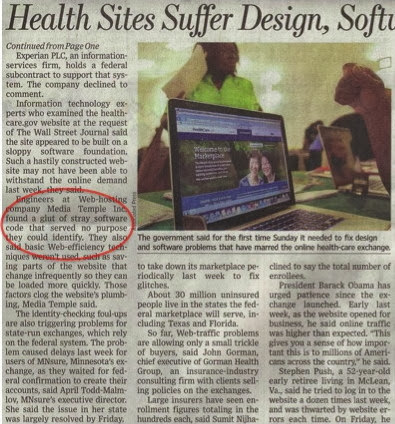
That's the piece of code that calls the NSA ...
As someone who goes to bed listening to Ground Zero, it gets easier to see black helicopters. While reading yet another Wall Street Journal article on the major snafus getting the Obamacare exchanges to work, I saw this little throwaway paragraph and started thinking: Maybe the stray software does serve a purpose ...

Friday, August 9, 2013
Why bribes are better than extra credit

Asking for extra credit is a student's way of saying, "I can't be bothered to come to class or read the material, so why don't you let me write a three page paper and you can bump me up by a letter grade?"
Let's just say I hate the whole idea of extra credit ...
First of all, if I have to extend it to Mr. I-don't-have-time-for-class, then I have to extend it to everyone. I grade on a curve, so there is a chance that the extra credit will ultimately do nothing to change the distribution of grades.
Second of all, every three page paper that a student writes for extra credit is a three page paper that I have to read for extra credit. Anyone who has had to read papers by students who are asking for extra credit will tell you that when you are done, you walk away with an overwhelming sense of dread for the future of our country.
So there we have it: Extra credit is unfair to the smart and studious, it provides an uncertain and small benefit to the extra credit seeker, and imposes a huge cost on the instructor. And, the cost to the instructors is much higher than the potential benefit to the student. It is entirely economically inefficient.
Then it hit me ... bribes are much more economically efficient.
- It imposes a cost on the student seeking the higher grade. And, its more fair: "A" students would never pay the bribe, and "F" students would probably be willing to pay a stiff price to get into passing territory.
- Rather than imposing a cost on the instructor, it benefits the instructor.
Now, you'll say that the bribes diminish the value of smarts and studying. So what? So does extra credit: Extra credit is a way of making up an entire course's worth of work with a little three page essay.
I think I'll put my new "extra credit" system in my syllabus next year and see what the department chair says. He's an economist, after all ...
Wednesday, July 31, 2013
We're #2! ... On a list of cities likely to follow Detroit

From the article:
One has to wonder if Portland might deliberately drive itself into bankruptcy as part of a larger plan to become the hipster capital of the world.
Regardless, the largest city in Oregon is well on its way to financial trouble. Moody's is reviewing the city's credit rating for its general obligation bonds, but also for Portland's tax obligation bonds, housing bonds and redevelopment bonds. The city has more than $453 million in unfunded pension debt.
Pew notes Portland "had virtually no asset" to offset unfunded liabilities of $2.3 billion in fiscal 2009 for its pension and disability plan for police and firefighters. The city is essentially paying for the retirement costs of those uniformed employees on a pay-as-you-go basis, which any actuary can tell you is a terrible idea.
The article does get on thing wrong, but that's not necessarily good news.
You see, Portland's police and firefighter pensions aren't really all that unfunded. That's because our property taxes will continue to rise to meet whatever costs the pension system throw at us.
I bet you're asking, "What about those property tax limitations?"
Nope. Portland's police and firefighter pensions are exempt.
So, the good news is that Portland probably won't go bankrupt on police and firefighter pensions. The bad news is that we'll keep seeing increasing property taxes, without increasing services.
Sunday, June 23, 2013
Laurelhurst History: Even 100 years ago, Laurelhurst residents were protective of their park
 |
| Oregonian, April 16, 1913 |
Subscribe to:
Posts (Atom)